
Overview
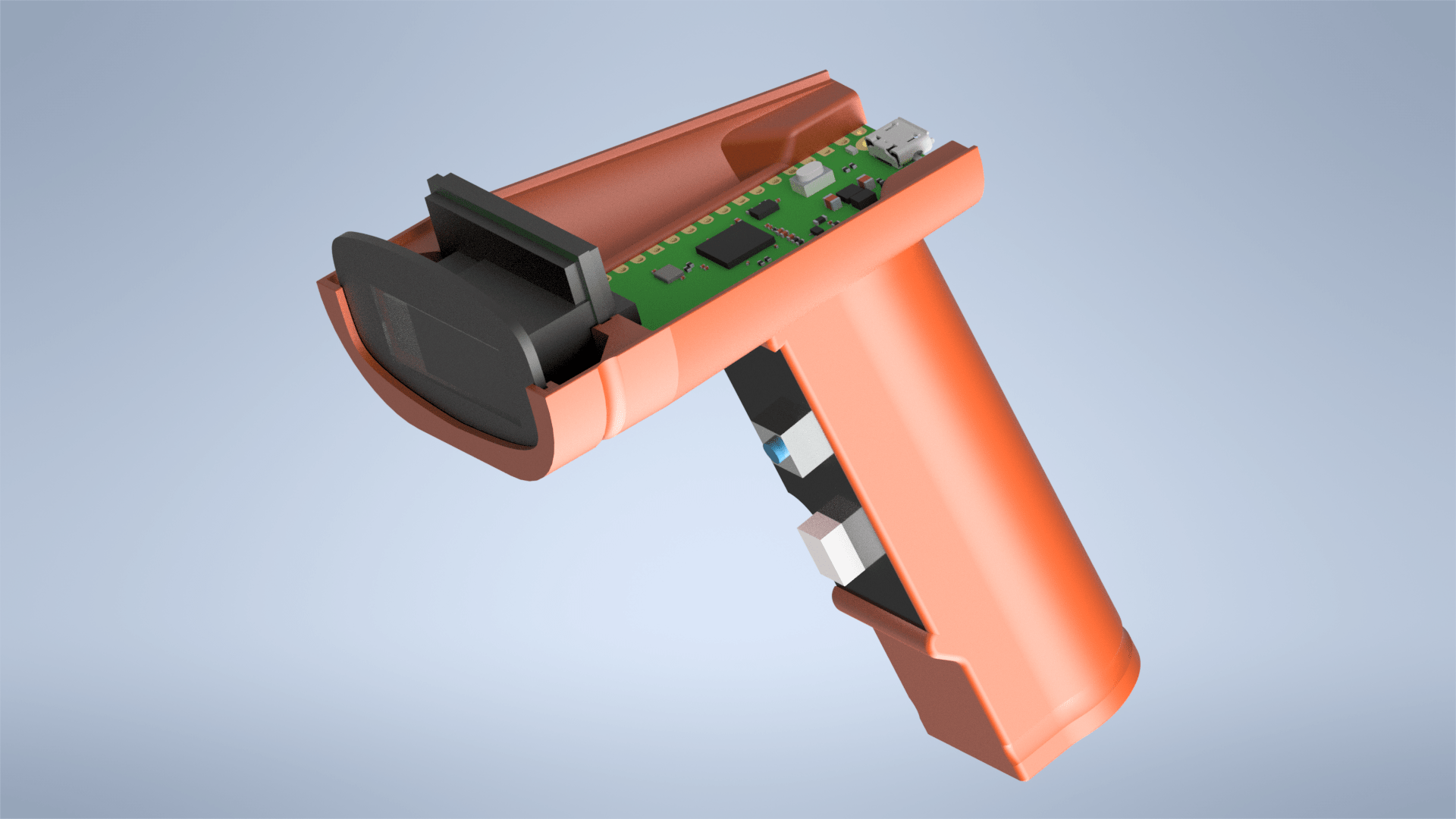
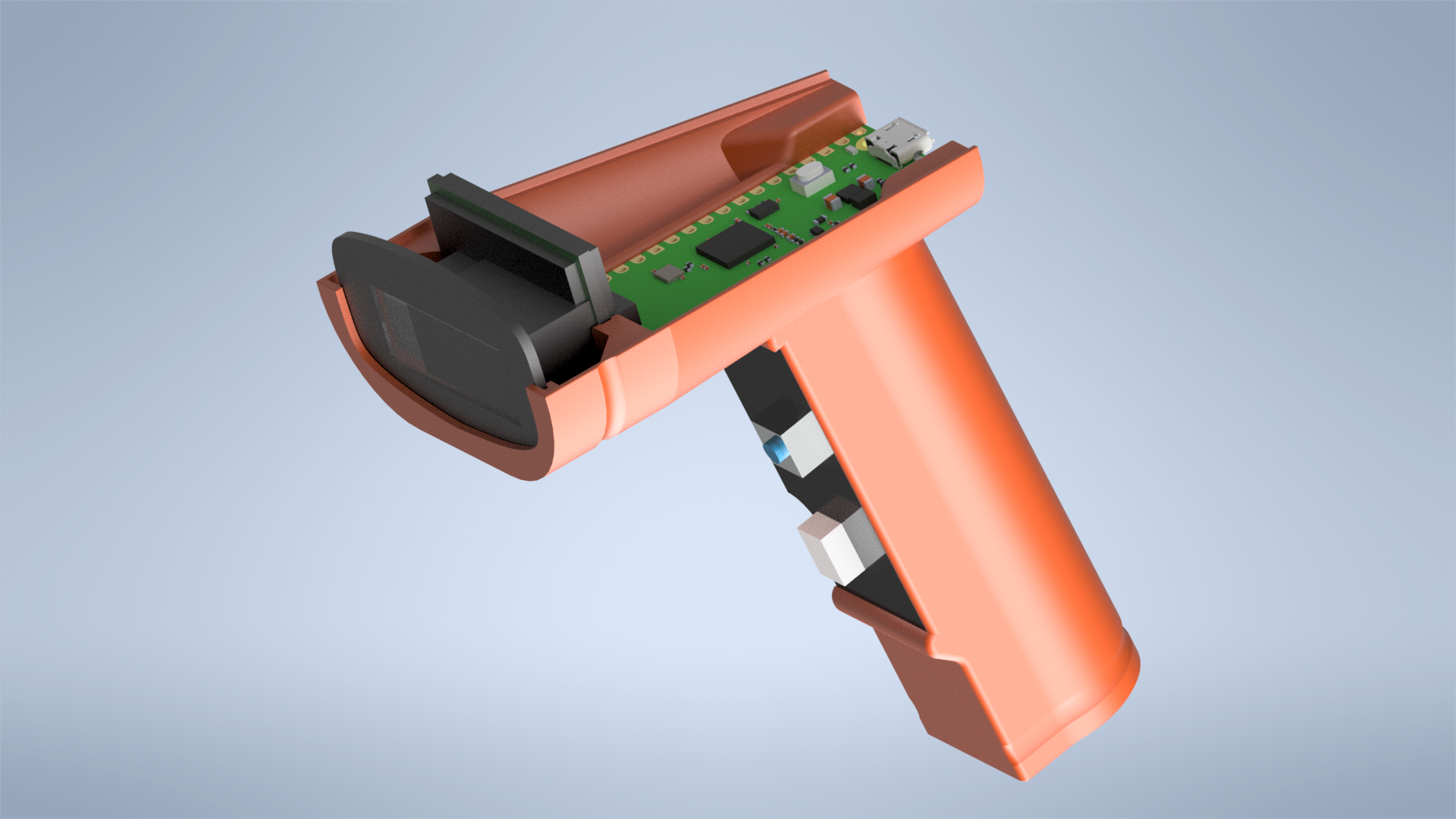
This project focused on designing and prototyping a wireless barcode scanner powered by a Raspberry Pi Pico. The scanner was developed with a focus on simplicity, sustainability, and functionality, while incorporating rapid prototyping techniques to streamline the development process.
Design Objectives
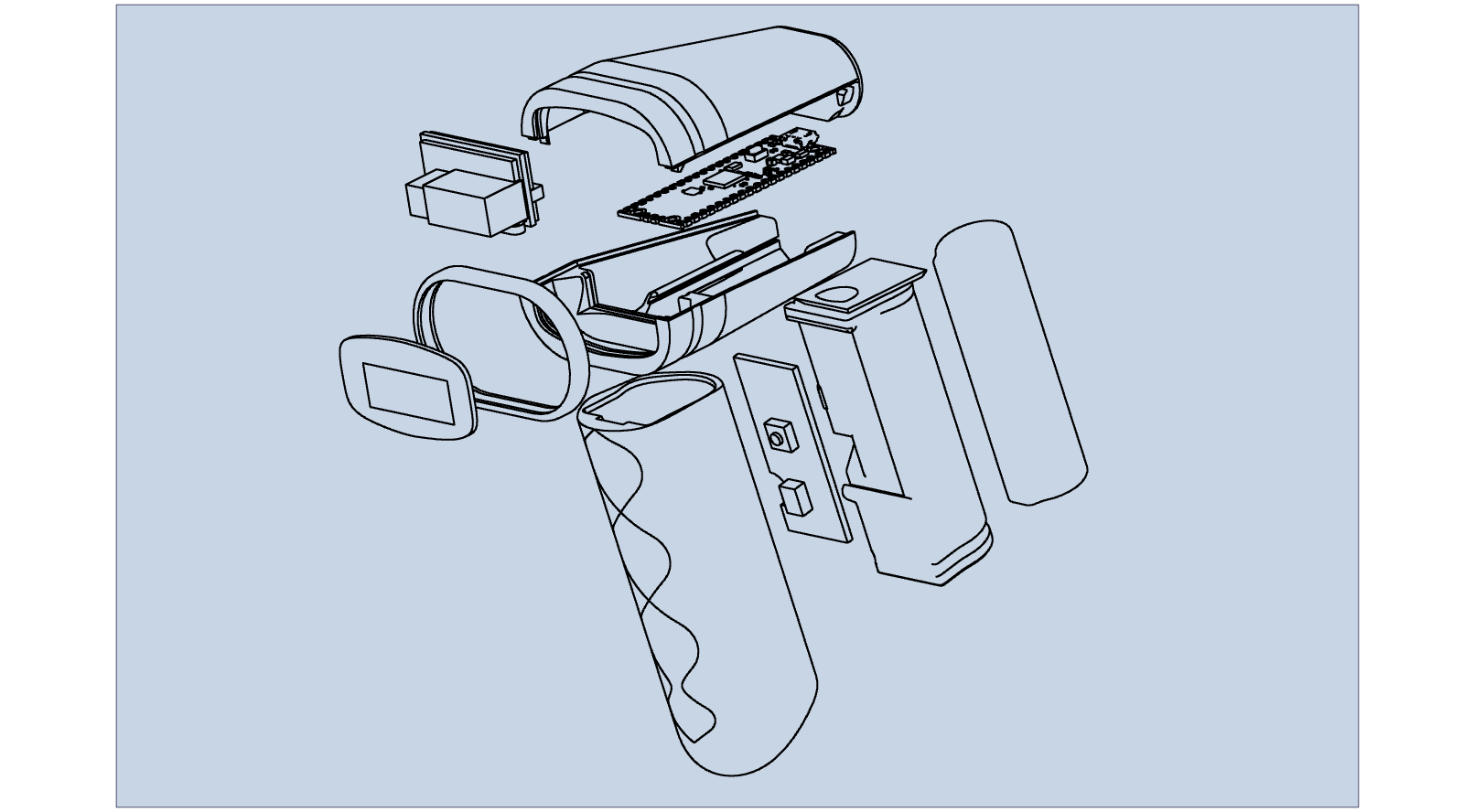
- Sustainability: Ensure the device is easy to disassemble for recycling and constructed without screws.
- Modular Design: Focus on simple assembly and maintenance.
- Prototyping Efficiency: Rapid iteration using 3D printing and other CAD tools to minimize production time and waste.
Development Process
- Initial CAD Models
- Models of the core components, including the Raspberry Pi Pico and scanner module, were created using measurements and available resources from GrabCAD.
- Precise fitting of the components was ensured through iterative prototyping and refinement.
- First Prototype
- The initial design featured size-critical parts, such as the battery housing, scanner slot, and Raspberry Pi mounting.
- A screw-in handle was printed, and components were slotted into place to evaluate assembly and ergonomics.
- Second Prototype
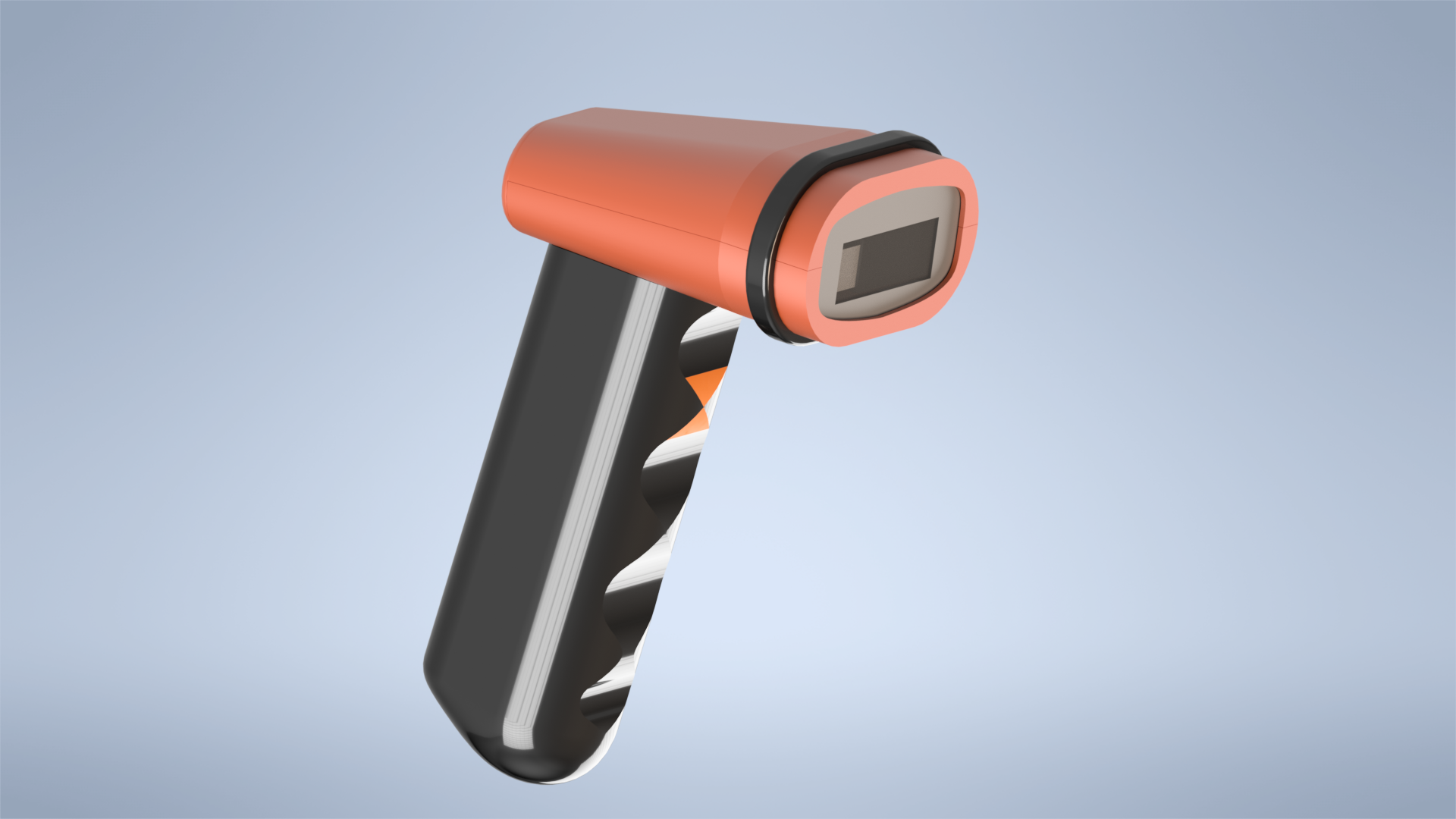
- Improvements focused on ergonomics and user comfort after identifying the initial design as too blocky.
- A tubular handle was added with space for a battery and switch, refining cable management and assembly.
- The handle was printed in flexible TPU material to allow for button integration without additional moving parts.
- Prototyping and 3D Printing
- Parts were sliced using PrusaSlicer with 0.2mm layer heights and a 0.6mm nozzle, optimizing for speed and material efficiency.
- Components were printed using recycled PLA and TPU, ensuring flexibility and eco-friendliness.
- Multiple iterations were created to refine tolerances, ergonomics, and assembly.
- Final Design
- The final product features a modular design with a TPU handle for enhanced grip and functionality.
- A retaining band with a locking ridge secures the components, eliminating the need for screws and simplifying disassembly.
Key Features
- Ergonomic Handle: Designed with user comfort in mind, using a flexible TPU material for grip and trigger functionality.
- Screwless Assembly: Components slot together securely, allowing for easy assembly and recycling.
- Sustainability: Constructed primarily from recycled PLA, aligning with eco-friendly design principles.
- Rapid Iteration: Prototypes were iteratively improved to achieve precise tolerances and usability.
Outcome
The wireless barcode scanner combines innovative design with functional simplicity, achieving a sustainable and user-friendly solution. The integration of rapid prototyping techniques enabled efficient development and refinement, resulting in a final product that is practical, ergonomic, and environmentally conscious.
This project demonstrates the power of CAD and rapid prototyping in turning concepts into reality.
Presentation
Included below is presentation detailing the design process of the scanner:
 TL Weston